
What is mTLS?
Mutual TLS, or mTLS, is a more secure version of the standard TLS protocol that most websites already use. In regular TLS, your browser (or client) verifies the server’s identity by validating its certificate, but the server has no way of knowing who the client is.
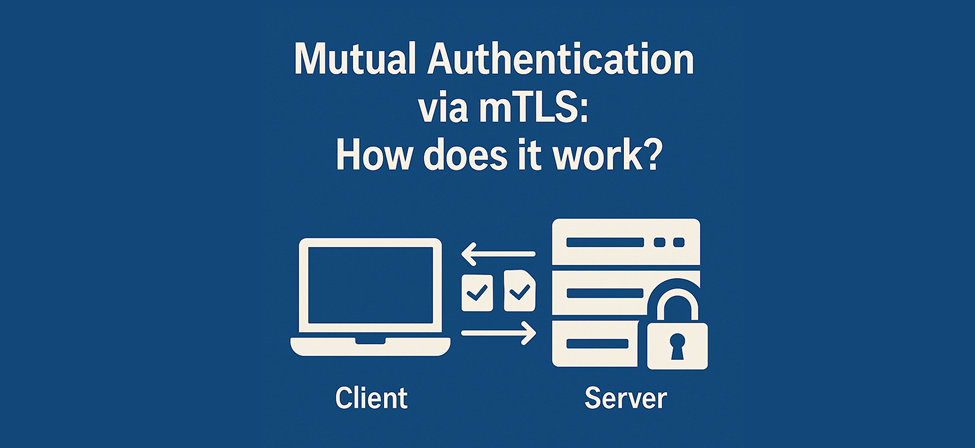
This is sufficient for most web interactions, but it’s not enough when both sides need to know exactly who they’re communicating with. That’s where mTLS comes in. It adds mutual authentication, meaning both the client and the server exchange certificates and verify each other before any sensitive data is transferred. Think of it as a handshake where both parties show their ID, not just one. Under the surface, it’s still TLS, just with an extra step during the handshake. The client presents its certificate, the server verifies it (and vice versa), and if everything checks out, they proceed to encrypted communication.
Pros and Cons of Mutual Authentication
Pros:
- Strong identity checks on both ends
- Much harder for attackers to impersonate clients or servers
- Removes the need for passwords or tokens
- Works well in Zero Trust environments where every connection must be verified
Cons:
- Managing client certificates can be a pain (issuance, renewal, revocation)
- Doesn’t allow the public to access the website or web service
- Onboarding new clients takes more effort
- Requires a functioning certificate infrastructure (PKI) on both ends
Common Use Cases
mTLS isn’t something you use everywhere, but in the right context, it’s a game-changer. Some common scenarios:
- Microservices inside a cluster verify each other to prevent lateral movement
- API gateways that need to authenticate not just incoming requests but also backend services
- Zero Trust networks, where identity must be proven at every step
- IoT devices connecting to a central server that must know exactly what’s on the other end
How mTLS Works (Step-by-Step)
- The client starts the handshake by sending a “Client Hello.”
- The server responds with its certificate, like in standard TLS.
- The server then asks the client for its certificate.
- The client sends its certificate.
- Each side checks the other’s certificate against a trusted CA.
- If all looks good, they complete the handshake and start talking over an encrypted channel.
- This whole process happens in milliseconds and is invisible to the user, but under the hood, it’s building a chain of trust between both parties.
When to Use (or Not Use) mTLS
Use mTLS if:
- You work in a regulated industry like finance or healthcare or need a highly secure environment
- You need strong, verifiable identities on both ends of a connection
- You already have (or are planning) infrastructure for certificate management
Skip mTLS if:
- Your users are public clients like browsers or mobile apps without client certs
- OAuth2 or API tokens already cover your use case securely enough
- Managing client certificates would add more overhead than benefit
How to Implement mTLS
At a high level, you’ll need to configure both sides of the connection to use certificates:
Server:
- Has a valid TLS certificate (like any HTTPS server)
- Configured to ask for and verify client certificates
Client:
- Has its own certificate and private key
- Sends the certificate during the TLS handshake
Other things you’ll need:
- A trusted Certificate Authority to sign your certs (in many cases this is a private CA)
- A way to distribute and renew client certificates (manually or automatically)
- Certificate lifecycle management for both client and server certificates
Final Thoughts
TLS provides a reliable built-in method for both parties in a connection to trust each other. It’s not suitable for every situation, but where applicable, it offers a vital security layer. With proper tools and planning, the operational costs remain manageable, and the trust advantages are substantial.